
Production Services ·
Planning Power for an Okanagan Location Shoot
Location power is not just a generator or a row of outlets. The plan has to run the lights, camera support, sound, monitors and charging without adding bad cable routes, unwanted noise or an avoidable stop. KFS plans locations, equipment and crew together; this is the information that makes an Okanagan power plan useful before booking.
List every load and how long it runs.
Start with the equipment that will actually be used, not a general lighting package. Record each light, ballast, charger, monitor, sound cart, camera accessory, practical and production device that needs power. Include the expected operating time and anything that may run at the same time.
The final load and distribution should be confirmed by qualified crew. A fixture name alone does not answer the question: output level, voltage, cable length, startup demand, charging cycles and the number of active systems can all change what the day requires.
Verify the supply and the cable route.
During the scout, identify the available supply, who controls it and how far it is from each setup. Do not assume that nearby outlets are on separate circuits or that a visible receptacle is suitable for the planned load. Confirm access to the relevant electrical areas with the location and the crew responsible for power.
Then map the cable route. Doorways, stairs, roads, public walkways, wet ground, livestock areas and long runs affect equipment, labour and safety. A source can have enough capacity and still be the wrong source if the cable cannot reach set cleanly.
Account for sound, access and weather.
A portable generator may solve one problem and create another if it sits inside the sound path or cannot be parked where the cable plan expects it. Battery and vehicle-based systems can reduce engine noise, but their approved output, operating time, reserve and access still have to be checked against the load.
Talk through power with lighting, sound and locations at the same time. Wind, rain protection, heat, vehicle restrictions, public access and company moves can change the choice. If the production moves during the day, the power source, cable, charging plan and crew all have to move on the same schedule.
Match the source and backup to the day.
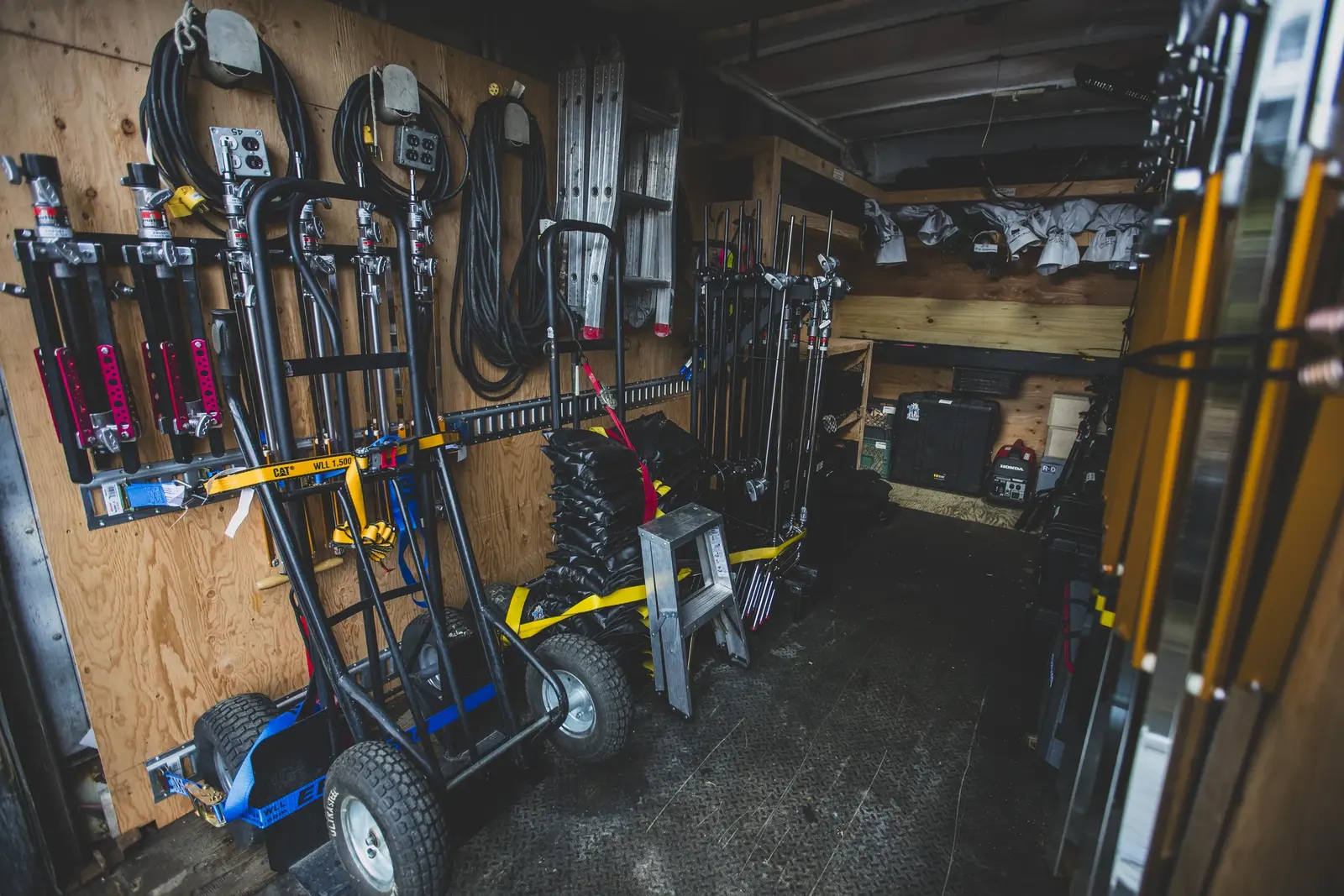
House power, portable generators, battery systems, production vehicles and larger distribution packages each fit different jobs. Choose among them after the load and location are known. The KFS Gear power inventory shows current planning options, including the KFS F-150 Lightning; availability and fit still need confirmation for the production.
Name the fallback before call time. That may be reserve capacity, a second source, replacement equipment or a reduced lighting plan that has already been discussed. For a larger package, review KFS's grip-truck production support and confirm the crew, transport and distribution requirements together.
Send the power brief before booking.
Send the shoot date, location, working hours, equipment list, simultaneous loads, sound-sensitive setups, cable distances, weather exposure, vehicle access, company moves and backup expectation. Include photographs or a scout diagram when the route is difficult to describe.
KFS can test that information against the location, schedule and local package before the rental cart is locked. Start with the production services and equipment rental pages, then send the brief with the decisions that still need to be made.
